
Lego Voyagers Unpacked: The Genius and Growing Pains of Staying True to the Lego Spirit










Popular Now
 Rust
Rust
 Gacha Club
 NBA 2K24
 BeamNG.drive
 Fall Guys
 Roblox
 Valorant
 Free Fire
 Geometry Dash
 Minecraft
 Introduction: Embarking on a Familiar Yet Expansive Digital Journey
The highly anticipated release of Lego Voyagers has once again ignited the imaginations of brick enthusiasts and gamers alike. Billed as an ambitious open-world building and exploration title, Voyagers promised to translate the boundless creativity of physical Lego bricks into a vast, interactive digital universe. From its initial reveal, the game championed the core tenets of the Lego philosophy: building, discovering, and reimagining. Our in-depth game review delves into whether this commitment truly elevates the experience or, as some early impressions suggest, adheres a little too faithfully to established formulas, presenting both its greatest strengths and its most notable limitations.
In an increasingly competitive landscape for premium gaming content, Lego Voyagers enters the fray with a distinct advantage—the enduring global appeal of the Lego brand. Players are invited to construct anything they can conceive, explore diverse biomes, and unravel a narrative woven with characteristic Lego charm. This article aims to provide timely insights into its gameplay mechanics, visual fidelity, narrative depth, and, crucially, address the critical nuances of its design ethos. Is it a groundbreaking leap for the franchise, or a comfortable, albeit somewhat predictable, evolution?
The Core Gameplay Loop: Brick-by-Brick Immersion
At the heart of Lego Voyagers lies its sophisticated and intuitive building system. Players gather resources from the environment—from crystalline formations to ancient flora—which are then transformed into digital bricks. This resource management is streamlined, ensuring the focus remains on creative construction rather than tedious grinding. The freedom offered is genuinely impressive; you can construct complex vehicles, sprawling bases, or intricate contraptions limited only by your imagination and the virtual brick count. This aspect truly embodies the digital Lego experience that fans have yearned for, delivering a potent sense of accomplishment with every new creation.
Exploration is equally central to the experience. The game world is expansive, featuring diverse environments ranging from lush jungles to arid deserts and crystalline caverns. Each biome offers unique challenges, resources, and hidden secrets. Navigating these vast landscapes using player-built vehicles or even custom-designed creatures is a delight, promoting genuine curiosity and discovery. The interaction with the environment feels robust, and the physics engine, while whimsical, allows for satisfying destruction and reconstruction. This core loop of gathering, building, and exploring forms the bedrock of player engagement, promising countless hours of unfettered creativity for those who embrace its sandbox nature.

Visuals, Audio, and Narrative: A Faithful Recreation
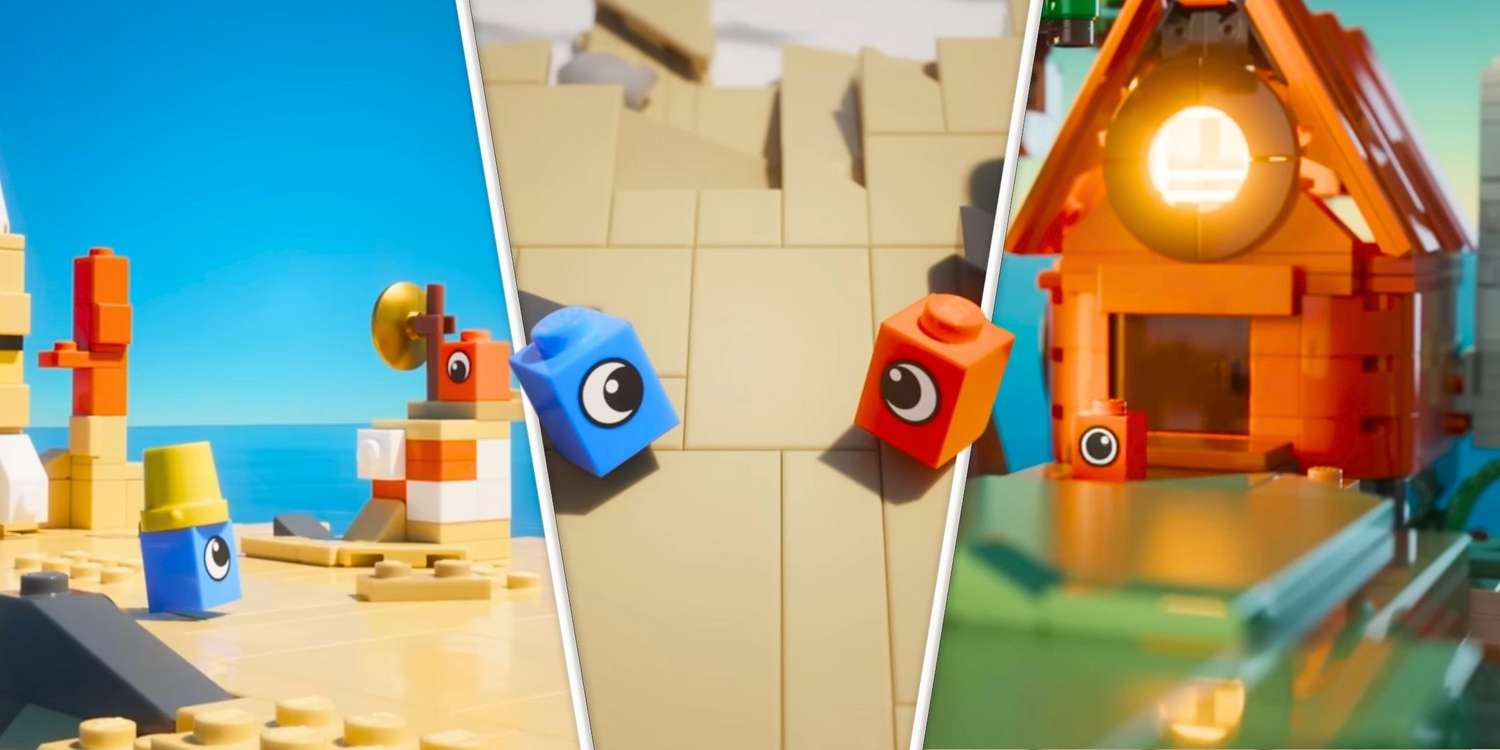
Visually, Lego Voyagers is a feast for the eyes, staying true to the vibrant, blocky aesthetic that defines the Lego universe. Character models are charmingly expressive, and environmental details, despite their inherent geometric simplicity, are rendered with impressive fidelity. Lighting effects are particularly noteworthy, casting dynamic shadows and reflections that bring the plastic world to life. The varied biomes are distinct and well-realized, inviting players to linger and appreciate the craftsmanship. It’s a game that looks and feels unmistakably like Lego, which for many, is precisely the appeal. The performance across various platforms is generally smooth, testament to optimized Lego game graphics.
The audio design complements the visuals perfectly. A whimsical, yet often epic, orchestral score accompanies your adventures, adapting dynamically to the on-screen action. Sound effects for building, breaking, and traversing are crisp and satisfying, contributing significantly to the immersive world. While the narrative isn’t the primary draw for a sandbox title, Lego Voyagers delivers an engaging storytelling experience with a lighthearted, family-friendly tone. Players are tasked with uncovering the mysteries of a forgotten civilization, interacting with a cast of quirky Lego characters who provide quests and comedic relief. The plot, though not deeply complex, serves as a sufficient framework to encourage exploration and provide direction for those who prefer a structured journey.
The Double-Edged Sword: Fidelity to a Fault
Herein lies the central paradox of Lego Voyagers: its unwavering fidelity to the Lego spirit, while commendable, sometimes becomes its most significant drawback. The game’s design principles, rooted in accessibility and clear objectives, occasionally shy away from the deeper complexities and innovations found in contemporary open-world building games. For instance, while the building mechanics are robust, the overall progression system can feel somewhat linear and predictable for veteran gamers seeking genuinely novel challenges.
Critics might argue that the game, in its earnest attempt to appeal to a broad audience, including younger players, avoids taking significant risks in its game development insights. The quest design, while charming, can occasionally fall into repetitive patterns familiar from earlier Lego titles, such as fetch quests or simple environmental puzzles. This adherence to established formulas, while safe, might not satisfy players craving groundbreaking mechanics or a truly emergent sandbox experience where the world reacts to player actions in unpredictable ways. The lack of true stakes or complex resource chains, while maintaining accessibility, may also limit the long-term strategic depth that could capture the attention of older players beyond initial curiosity.
Furthermore, the game’s difficulty curve, designed to be approachable, rarely escalates to provide a true test of skill or creative problem-solving. This can lead to a sense of complacency, where the impressive tools at the player’s disposal are not always pushed to their creative limits. In an era where gaming innovation challenges are constantly pushing boundaries, Lego Voyagers occasionally feels content to rest on the laurels of its brand and its proven, albeit conservative, design ethos. This isn’t to say the game isn’t fun, but rather that its potential for truly revolutionary gameplay might be slightly curtailed by its commitment to a familiar, comfortable mold.
Replayability, Multiplayer, and Post-Launch Content
Despite some of its conservative design choices, Lego Voyagers does offer considerable replayability. The sheer joy of building and experimenting with new creations ensures that players will return to their digital workshop time and again. The vastness of the world, coupled with numerous hidden collectibles and challenges, provides ample incentive for continued exploration. The game also features robust online multiplayer features, allowing friends to collaborate on massive builds or embark on shared adventures, significantly enhancing the social aspect and extending its longevity. This collaborative element is where the game truly shines, as shared creativity can lead to astonishing and hilarious outcomes.
The developers have also indicated plans for ongoing post-launch support, with promises of new content, themes, and gameplay modes, which could address some of the current criticisms regarding innovation. This commitment to evolving the experience bodes well for long-term player engagement, as new updates could introduce the very elements of challenge and novelty that some players might currently find lacking. The framework is undeniably strong, and with continuous infusions of fresh content, Lego Voyagers could certainly grow into an even more compelling and multifaceted experience over time, solidifying its place as a cornerstone of the ultimate Lego game library.

Who is Lego Voyagers For? The Verdict
Lego Voyagers is, without a doubt, a charming and ambitious title that successfully captures the essence of playing with physical Lego bricks. Its accessible building mechanics, vibrant visuals, and expansive world offer countless hours of creative freedom and exploration, making it an ideal choice for family-friendly gaming and fans of the Lego brand. For children and casual gamers, it presents an unparalleled opportunity to unleash their imagination in a safe and engaging digital environment. The robust multiplayer aspect further enhances its appeal, fostering collaborative creativity.
However, for seasoned gamers accustomed to deeper systems, more complex narratives, or revolutionary mechanics, Lego Voyagers might occasionally feel a touch too familiar, playing it safe within the established parameters of the Lego gaming universe. Its dedication to the ‘Lego spirit’ means it prioritizes broad appeal over niche innovation, which is both its greatest strength and its most significant limitation. While it doesn’t reinvent the wheel of open-world gaming, it masterfully crafts a joyful, imaginative space that is undeniably fun.
Ultimately, Lego Voyagers is a heartfelt ode to the power of imagination and construction. It’s a game that delivers precisely what it promises: a vast digital playground where every brick matters. While it might not redefine the genre, its unwavering commitment to the core values of Lego ensures a wholesome and deeply satisfying experience for its target audience. It is a premium piece of interactive entertainment that largely succeeds in its mission, even if its adherence to tradition occasionally prevents it from soaring to truly unprecedented heights. For those seeking pure, unadulterated Lego fun, Voyagers is a journey worth taking.